
Easter Lunch with us
The Easter Lunch Menu is ready. Book now your table at Jacopa the brand new restaurant of Hotel San Francesco

Tortellini with mortadella, mushrooms and peas
The Easter Lunch Menu is ready
Book now your table at Jacopa, the brand new restaurant of Hotel San Francesco

Rome's biggest park: Villa Doria Pamphili
What is the first thing that comes to mind when you think of Rome: the Coliseum? the Vatican? the Trevi Fountain? What you may not know is that, in addition to its abundance of ancient sites, Rome is a very green city with a number of parks worth visiting.
What is the first thing that comes to mind when you think of Rome: the Coliseum? the Vatican? the Trevi Fountain? What you may not know is that, in addition to its abundance of ancient sites, Rome is a very green city with a number of parks worth visiting.
No matter January or June, Rome's climate makes any time of year the perfect moment for a walk or a picnic outside. Luckily for the guests of Hotel San Francesco, the biggest of Rome's parks, Villa Doria Pamphili, is just minutes away.

Villa Pamphili Lake
Villa Doria Pamphili is a seventeenth-century villa located one neighborhood over from Trastevere in Monteverde, just outside the Porta San Pancrazio in the ancient walls of Rome where the ancient road of the Via Aurelia commences.
It began as a villa for the Pamphili family and when the line died out in the eighteenth century, it passed to Prince Giovanni Andrea IV Doria from which time it has been known as the Villa Doria Pamphili.
In 1965–1971, it was bought by the City of Rome from the Doria-Pamphilii-Landi family.
The park has an area of 1.8 km². Its facilities include sites for bird-watching, jogging, and biking, and it is a favorite hang-out spot for Roman locals, especially on weekends.
With its many beautiful buildings, chapels, ponds and pine forests, you will want to add Villa Doria Pamphili to your list of places to visit during your stay in the Eternal City.
HOW TO REACH VILLA DORIA PAMPHILI FROM HOTEL SAN FRANCESCO
From Hotel San Francesco, you can reach Villa Pamphili in about 15 min. by public transports
Another great option would be to rent our bicycles and enjoy a nice ride across the park.
OPENING TIMES
The park is open every day, from 7.00 am to 18.00 pm in October-February; 7.00 am to 20.00 pm in March and September; and 7.00 am to 21.00 pm in April-August.
Author: our very good friend Samantha

Villa Farnesina and the Frescoes by Raphael
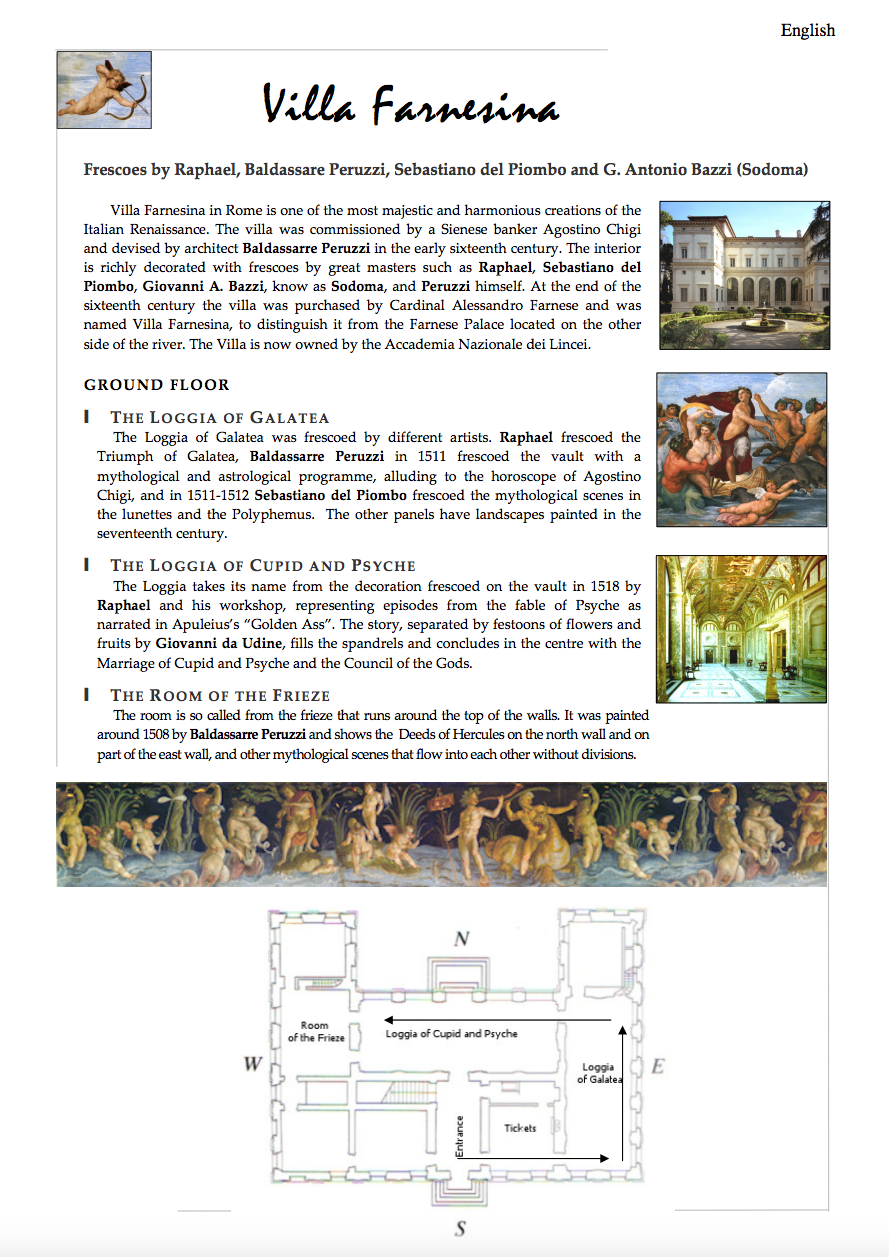
Built in the early sixteenth century at the behest of Agostino Chigi, rich banker from Siena, the Villa Farnesina in Rome, the Accademia Nazionale dei Lincei properties, it is one of the most noble and harmonious achievements of the Italian Renaissance.
Villa Farnesina and the Frescoes by Raphael
Built in the early sixteenth century at the behest of Agostino Chigi, rich banker from Siena, the Villa Farnesina in Rome, the Accademia Nazionale dei Lincei properties, it is one of the most noble and harmonious achievements of the Italian Renaissance.

The building, on two floors, has an innovative horseshoe plant, which opens to the garden with two wings between which there is a lodge located in the ground floor and consists of five arches.
The tour inside the Villa starts from the entrance hall and the ticket office on the ground floor.
You can visit the local representation: the Loggia of Galatea, where frescoes by Raphael, Sebastiano del Piombo and Baldassarre Peruzzi, the Loggia of Love and Psyche, where the fresco painted in 1518 by Raphael and the Loggia of Fregio, named after the painted frieze at the summit of the walls by Baldassare Peruzzi.
The Villa Farnesina is located in Via della Lungara 230, open Monday to Saturday from 9 to 14, excluding Sundays and holidays.

Villa Farnesina is walking distance from Hotel San Francesco
From the hotel you can reach it in only 14 minutes walk!
You have to take Via di San Francesco a Ripa and walk straight up to Santa Maria in Trastevere. Once you get there, take the first left for Via della Scala and you will find the Villa Farnesina on your right side.
English Depliant (click to enlarge)

This article has been edited by our receptionist Aileen
credits: www.villafarnesina.it


![The amazing Castel Sant'Angelo [VIDEO]](https://images.squarespace-cdn.com/content/v1/5571a376e4b0ce0031784ab5/1448791242274-IF53P94RXMBYIJ57SM8Y/image-asset.jpeg)



Palazzo Spada: a columns-gallery with a different perspective
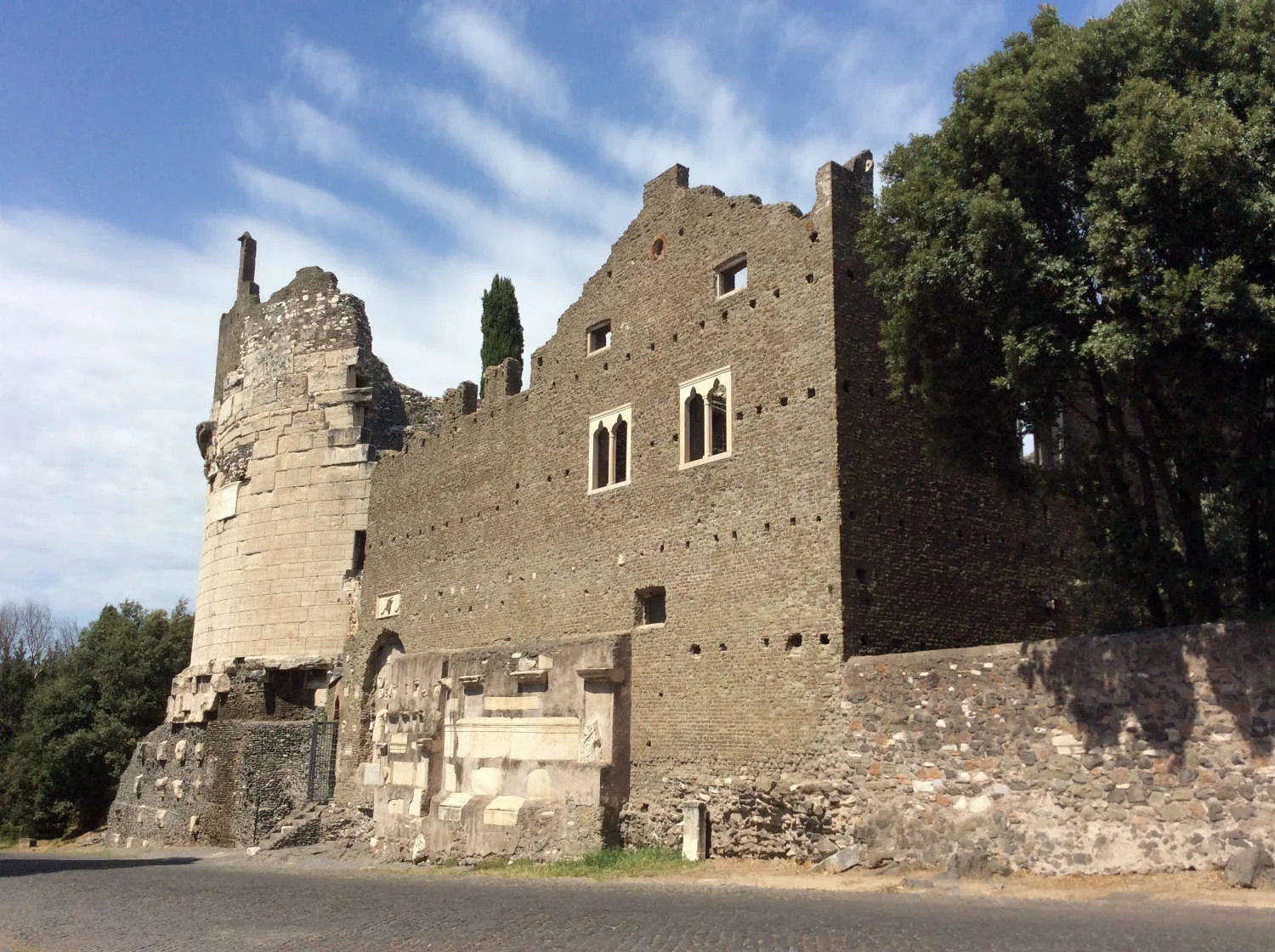
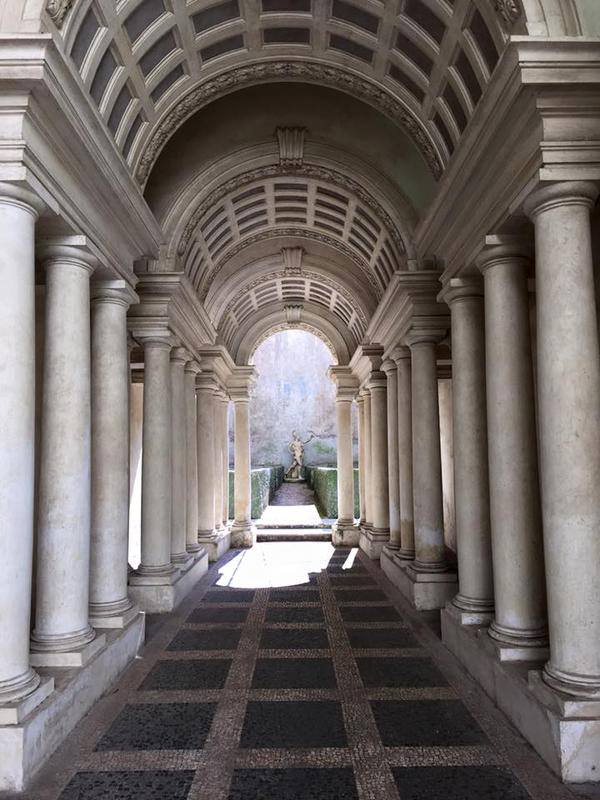
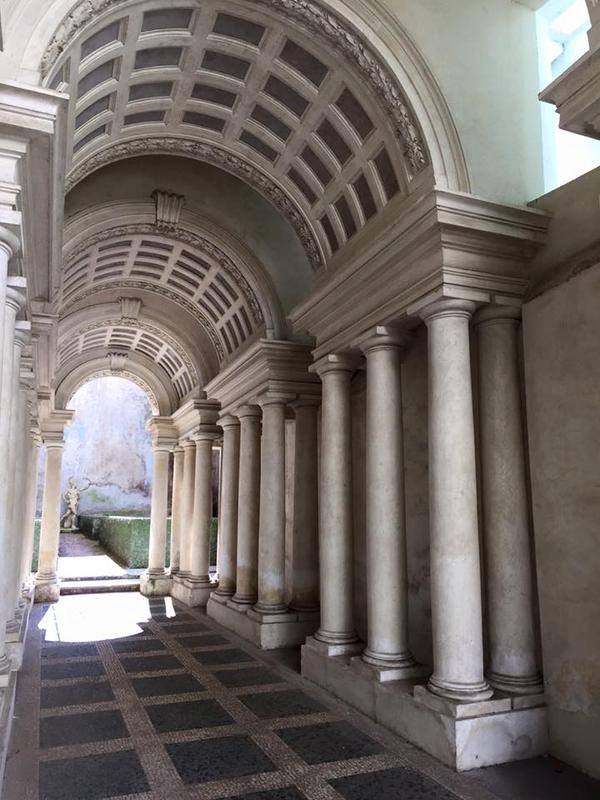
Palazzo Spada is an impressive building built in 1550 by Cardinal Capo di Ferro, later restored by Bernini and Borromini who created a unique full play of perspectives in a columns-gallery.
Palazzo Spada is an impressive building built in 1550 by Cardinal Capo di Ferro, later restored by Bernini and Borromini who created a unique full play of perspectives in a columns-gallery.
Looking at the facade with reliefs and entering the courtyard finely decorated with stucco you can relive all the past greatness of Rome. This impressive building was built in 1550 by Cardinal Capo di Ferro, later restored by Bernini and Borromini on behalf of Cardinal Bernardino Spada, who lived here in the 17th century.
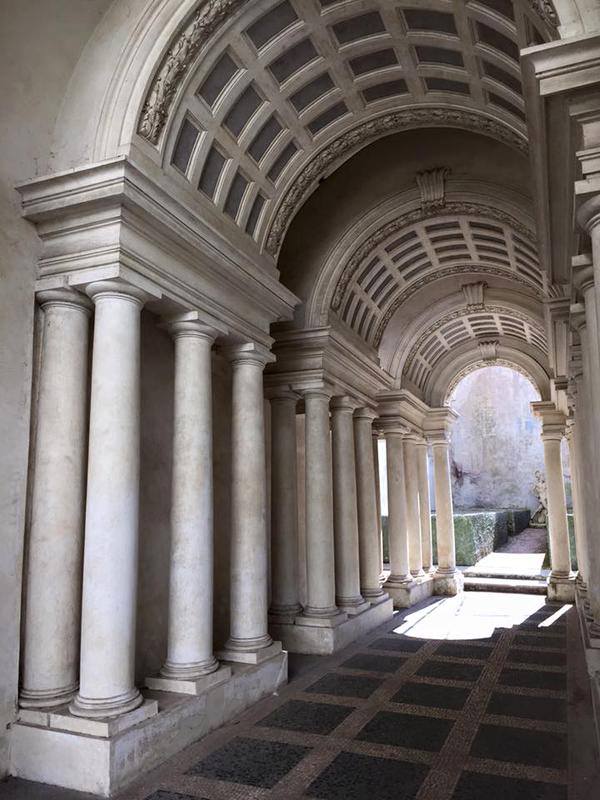
A full play of perspectives brings you in the columns-gallery of Borromini, that looks four times larger than it is.
Over the centuries the cardinals gathered paintings, sculpture and precious furniture. The masterworks: Andrea del Sarto, The Visitation and Guercinos Death of Dido.
How to reach it from Hotel San Francesco
From Hotel San Francesco, you can take the tram n. 8 direction “Piazza Venezia” and get off at the 3rd stop “Arenula/Min. Giustizia”; from there Palazzo Spada is 5 minutes walking distance, in Piazza Capo di Ferro, 13.
Post edited by our receptionist Giuseppe
Palazzo Barberini: A walk among art masterpieces
The Barberini Palace hosts the National Gallery of Ancient Art, entirely restored, located in Via delle Quattro Fontane, near Barberini Square
The Barberini Palace hosts the National Gallery of Ancient Art, entirely restored, located in Via delle Quattro Fontane, near Barberini Square
When Maffei Barberini became Pope Urban VIII in 1623, he decided that his family palace would have been constructed in the outskirts of the city, near the ruins of a temple. The task was entrusted to the architect Carlo Maderno, who built it as a country villa with wings that extended into the surrounding gardens. Unfortunately shortly after the laying of the foundations Carlo Maderno died and was succeeded by Bernini and Borromini, who brought his artistic mark through the elliptical spiral staircase inside.
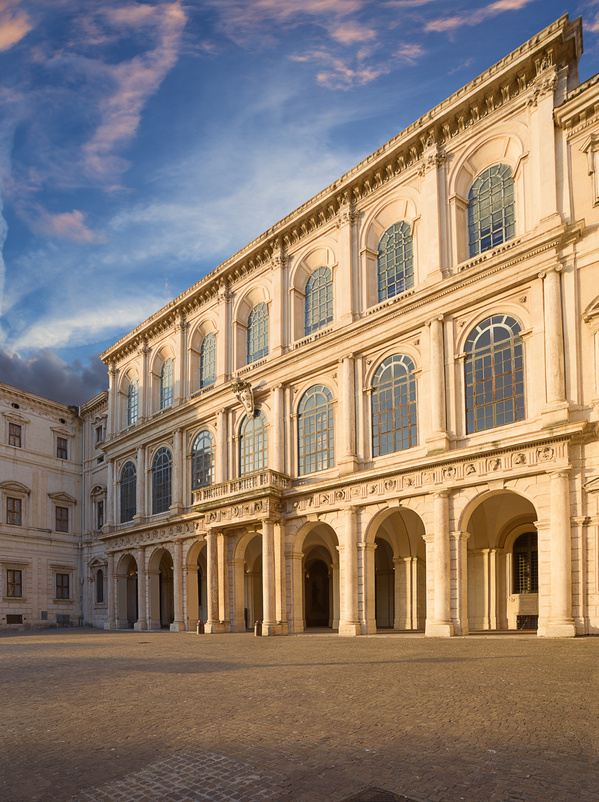
Palazzo Barberini - Roma
The Barberini Palace hosts the National Gallery of Ancient Art, entirely restored. On the ground floor (reopened 2010) you can see paintings from the 12th to the 15th century; on the first floor (reopened2010) you can find artworks from the 16th and the 17th centuries until the Caravaggeschi and the Emiliani; on the second floor (reopened 2011) the late 17th century and the 18th century until the Roman Neoclassicism. Since 2011 the Palace has also an exhibition hall for temporary shows. The masterworks: Guido Reni, The Portrait of Beatrice Cenci, the young man who was executed for the murder of his father, and the beautiful Raphaels Fornarina, the crazy passion of the painter.
How to reach it from Hotel San Francesco
From Hotel San Francesco, you can take the tram n° 8 getting off at Via Arenula.
Then just take the bus n° 63, getting off at Barberini Square; Palazzo Barberini is located in Via delle Quattro Fontane, 13.
Post edited by our receptionist Giuseppe
The Capuchin Crypt
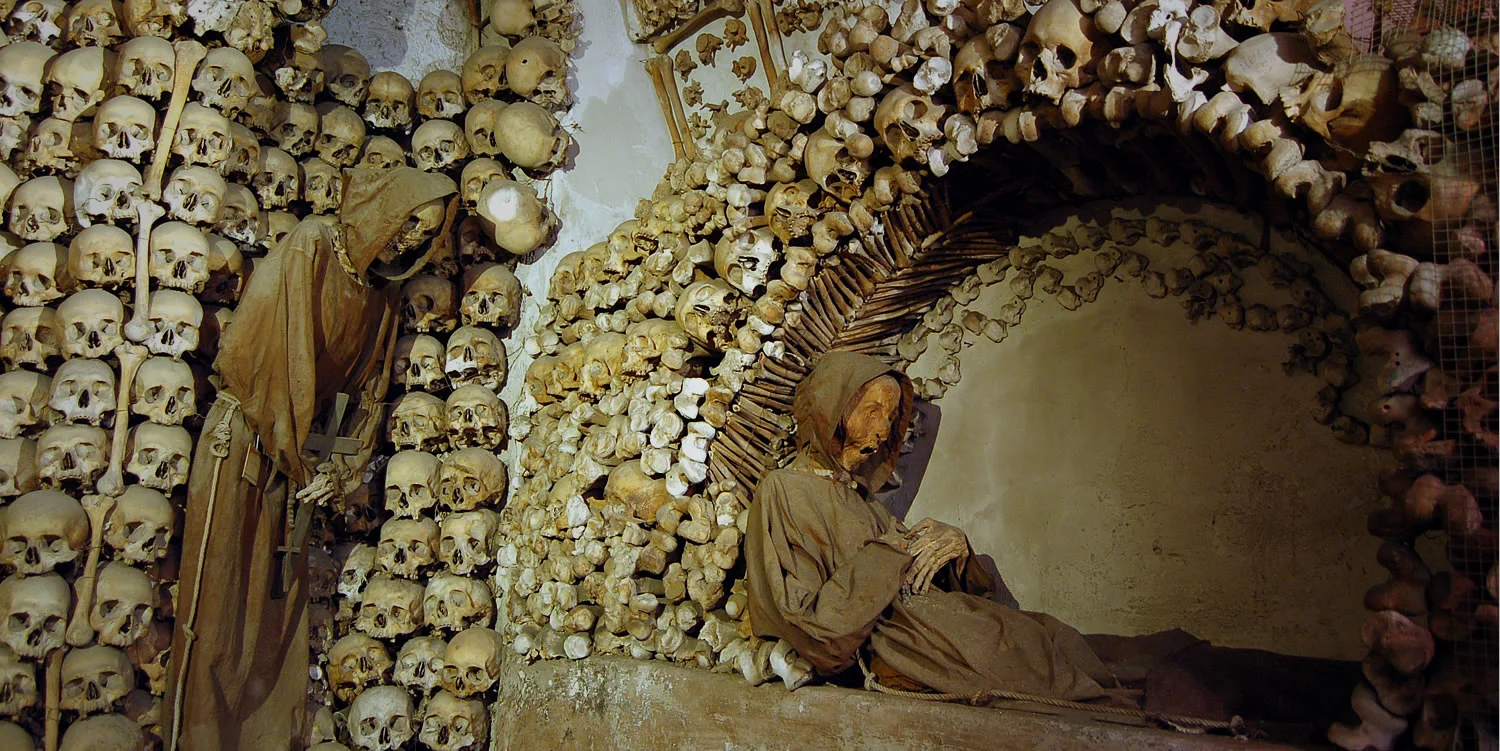
The Capuchin Crypt is a Monument of Human Bones and Corpses in Rome, located beneath the church of Santa Maria della Concezione dei Cappuccini on Via Veneto, near Barberini Square...
The Capuchin Crypt is a Monument of Human Bones and Corpses in Rome, located beneath the church of Santa Maria della Concezione dei Cappuccini on Via Veneto, near Barberini Square.

The Capuchin Crypt - Rome
Constructed between 1732-75, it is an ossuary made of a corridor about 30 metres long, connected with five chapels. holding the bones of over 3,700 Capuchin friars buried by their order between 1528 and 1870.
Each room is unique, with different bones used and arranged in creative ways, forming arches, garlands and chandeliers.
A placard in five languages declares “what you are now we used to be; what we are now you will be”.
There is no official history of how this bone church developed over the centuries. It is known that in 1631Capuchin Monks moved there from a nearby monastery and brought with them 300 carts full of their belongings and of bones from the Capuchin cemetery.
Bones kept collecting over the years and were used for the decoration of the bone church.
One of the refuged monks asked to arrange the bones in a artistic way while staying there, and that's how theCapuchin Crypt was created.
The Catholic order insists that the display is not meant to be macabre, but a silent reminder of the swift passage of life on Earth and our own mortality.
The entrance ticket is 6€ and it is including not only the crypt but also the Capuchin Museum.
How to reach it
From Hotel San Francesco, you can take the tram no 8 getting off at Via Arenula and from there you can take the bus no 63, getting off at Barberini Square.
This post has been edited by our receptionist Alessia
The Moses by Michelangelo
The Moses by Michelangelo is certainly one of his best works and it is housed in the church of San Pietro in Vincoli in Rome.
In 1505, Pope Julius II gave to Michelangelo the commission to design and sculpt his tomb. The initial design was massive and called...
The Moses by Michelangelo
It's certainly one of his best works and it is housed in the church of San Pietro in Vincoli in Rome.
In 1505, Pope Julius II gave to Michelangelo the commission to design and sculpt his tomb. The initial design was massive and called for over 40 statues, showing various figures creating a dynamic space and a true statement on the importance of Julius.
The project, however, was interrupted many times and, after the death of the Pope, the scale of the tomb was greatly reduced and Michelangelo made only one figure for the tomb, Moses.

The Moses by Michelangelo
He is shown as seated, holding stone tablets containing the Ten Commandments from God. His body faces forward. His head with its mighty beard looks to the left. His right foot rests on the ground and his left leg is raised so that only the toes touch the ground.
The facial expression of Moses is characterised as showing a mixture of wrath, pain, and contempt.
Curiosities
Once finished the statue, it seemed so real and alive that Michelangelo violently hit the knee of the statue with a hammer, shouting, "Why don't you speak to me?"
Michelangelo’s Moses is depicted with horns on his head. This is believed to be because of the mistranslation of the Hebrew Scriptures into Latin by St Jerome. Moses is actually described as having "rays of the skin of his face", which Jerome in the Vulgate had translated as "horns". The mistake in translation is possible because the word "keren" in the Hebrew language can mean either "radiated (light)" or "grew horns".
How to reach it from Hotel San Francesco
From Hotel San Francesco you can take the bus no 75 that in about 20 minutes arrives at the church of San Pietro in Vincoli, where you can find the Moses.
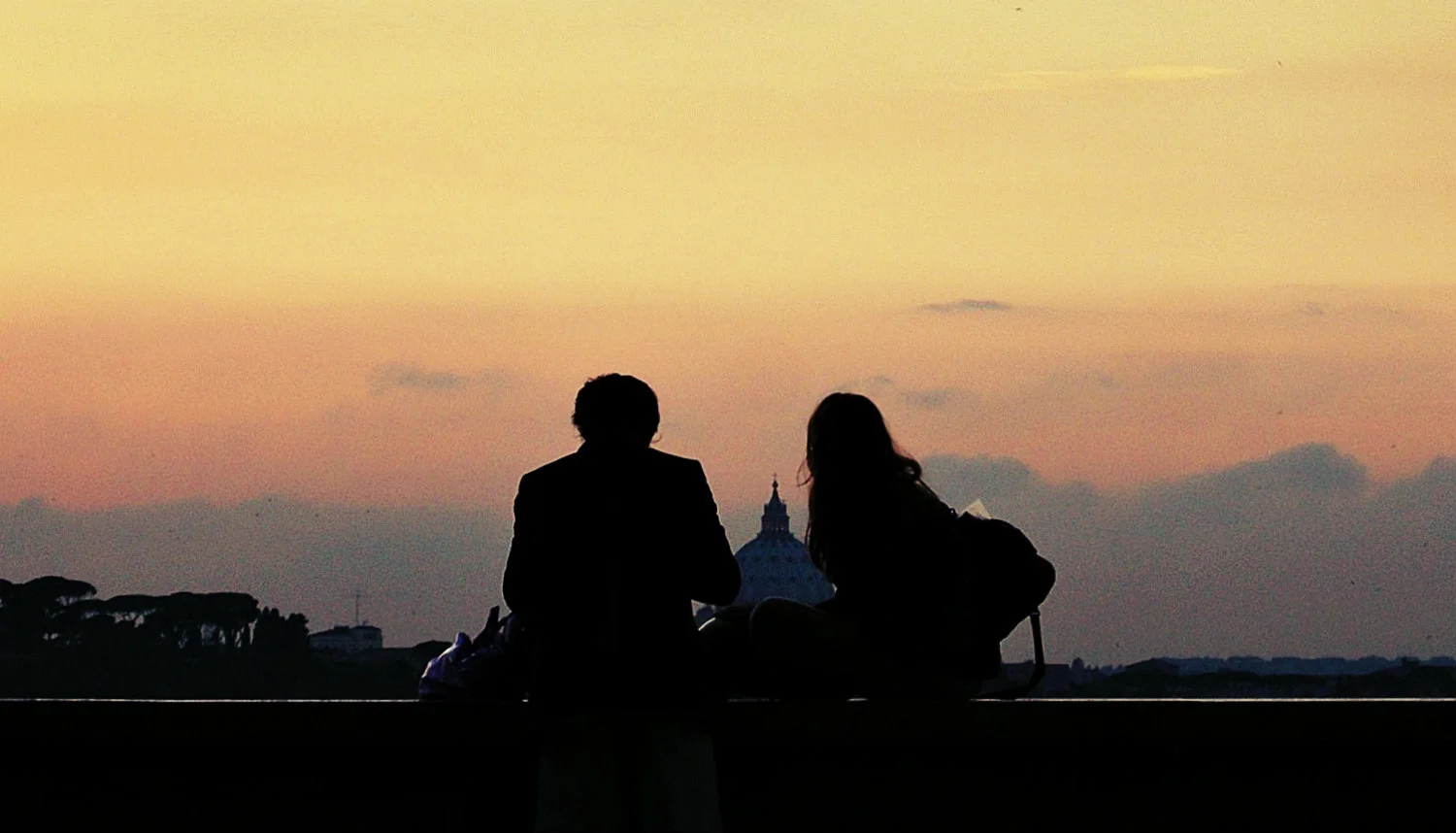
The most romantic terrace of Rome: The Orange Garden
The Orange Garden, also known as Parco Savello, is one of those places that you can find only in the eternal city. Surrounded by medieval walls, on top of the Aventine Hill, the Orange Garden is a romantic and peaceful place that offers a breathtaking view of the city, one of the most beautiful...
The Orange Garden, also known as Parco Savello, is one of those places that you can find only in the eternal city. Surrounded by medieval walls, on top of the Aventine Hill, the Orange Garden is a romantic and peaceful place that offers a breathtaking view of the city, one of the most beautiful one in addition to Pincio and the Gianicolo.
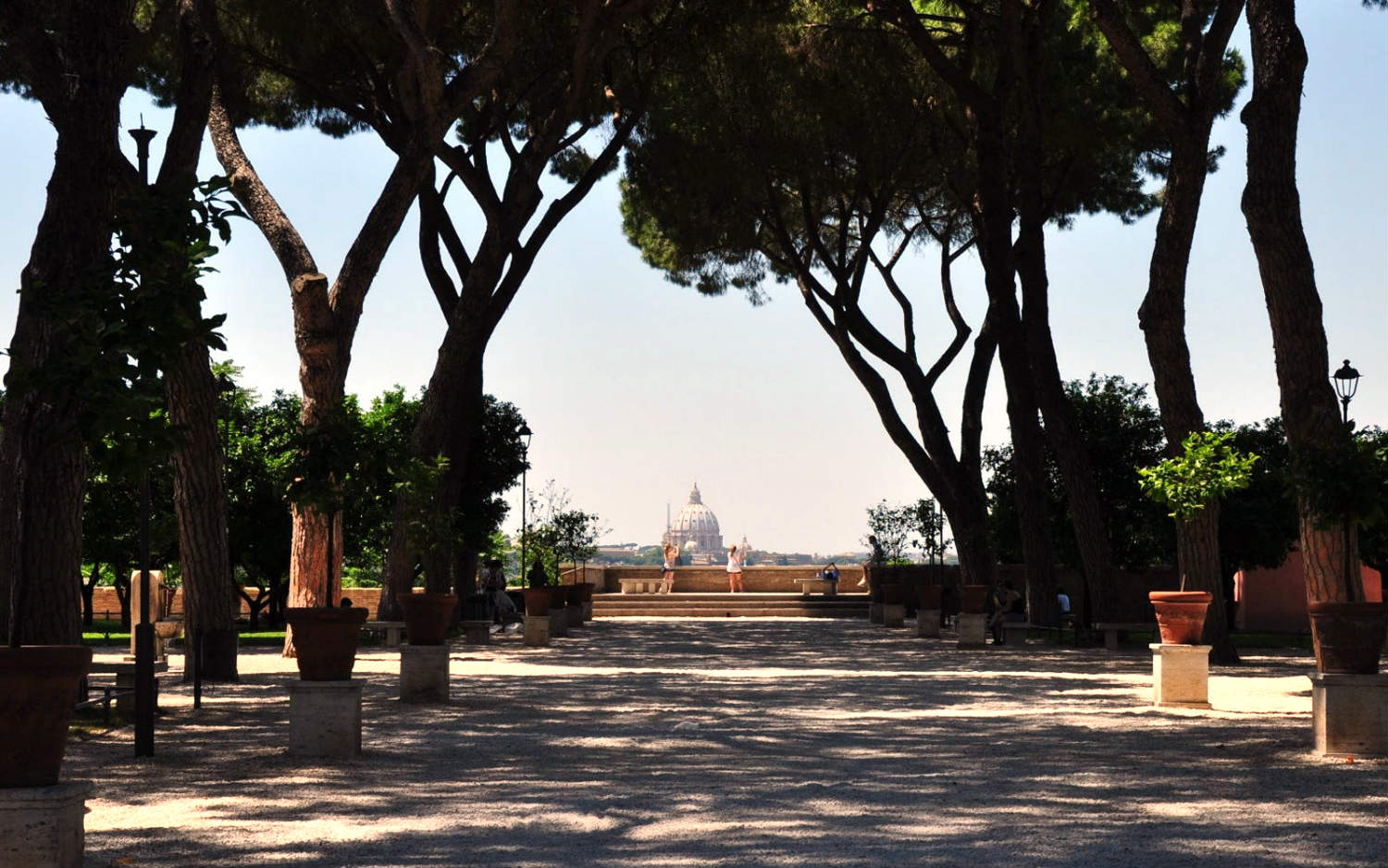
The Orange Garden - Rome
A nice fountain will introduce you in this green terrace, characterized by the presence of bitter orange trees all around: I love going there at the sunset, the sky become a painting!
Going out from there, just down the street, in Cavalieri di Malta Square, you will find another pearl of this area. Looking at the right side, you will see a small hole in a large door and if you put your eye in that hole you will see St. Peter’s dome at the end of a tunnel of plants.
In no other place in the world, your eye can see something as amazing as this view!
From Hotel San Francesco you can reach the Orange Garden in 20 minutes, walking up to the Aventine Hill.
Author: our receptionist Alessia


The amazing Castel Sant'Angelo [VIDEO]
Built around 123 A.D. as a tomb for Emperor Hadrian and his family, Castel Sant'Angelo has an unusual destiny in the history and art of the Rome. While all the other Roman monuments are overwhelmed...
Built around 123 A.D. as a tomb for Emperor Hadrian and his family, Castel Sant'Angelo has an unusual destiny in the history and art of the Rome.
While all the other Roman monuments are overwhelmed, reduced to ruins or quarries counting to be recycled into new, modern buildings, the Castle - through an uninterrupted series of developments and transformations that seem to slip into one another seamlessly continuity - goes for nearly two thousand years the fate and history of Rome. From funerary monument to a fortified outpost, from dark and terrible prison wonderful Renaissance that sees active within its walls Michelangelo, from prison to the Risorgimento Museum, Castel Sant'Angelo embodies the solemn Roman spaces, in massive walls, in the sumptuous frescoed rooms, the story of the eternal city where past and present appear inextricably linked
Non-Catholic Cemetery in Rome
There is no other place like this in Rome. When you get through the gate for the first time, a peacefulness atmosphere surround you.
Men from all over the world, rest together, under pine and cypress trees. The cemetery population is incredible rich in writers, painters and poets as Keats and Shelley.
A unique place, out of the tourist route.
There is no other place like this in Rome. When you get through the gate for the first time, a peacefulness atmosphere surround you.
Men from all over the world, rest together, under pine and cypress trees. The cemetery population is incredible rich in writers, painters and poets as Keats and Shelley.
"It might make one in love with death, to think that one should be buried in so sweet a place," wrote Shelley, before he was buried here.


In the past, it happened that, according to the ecclesiastical laws of the Catholic Church, Protestants were not allowed to be buried neither in Catholic churches nor in consecrated ground. Therefore, burial places for non-Catholics, like the one in Rome, came into use early, in some much-visited Italian harbor cities. The earliest grave to be founded is that of George Langton who died in 1738.
This beautiful cemetery is entirely self-supporting and it does not receives regular public funding. For this reason you will be asked to contribute with, at least € 3,00 each, for your visit.
From the site, there is also an excellent view of the Pyramid of Cestius but, unfortunately, is not possible to access to the archeological area.
During your visit, you probably will run into many cats. They are part of a colony since 1850 and they have their own website in English, Italian and German, (www.igattidellapiramide.it). You can also donate some money. There is a small case inside the cemetery.
How to reach it from Hotel San Francesco
To go to the cemetery from Hotel San Francesco you can take the bus n. 3 and stop on via Marmorata, close to Piramide subway station or you can have a walk. It takes about 20 minutes.
The main entrance is on Via Caio Cestio, 6 that is a side street off via Marmorata.
Opening times
The cemetery is open from Monday to Saturday, from 9.00 am to 15.00 pm (last entrance: 16:30 pm) and on Sundays, from 9.00 am to 13.00 pm (last entrance:12.30).
Author: our receptionist Cecilia
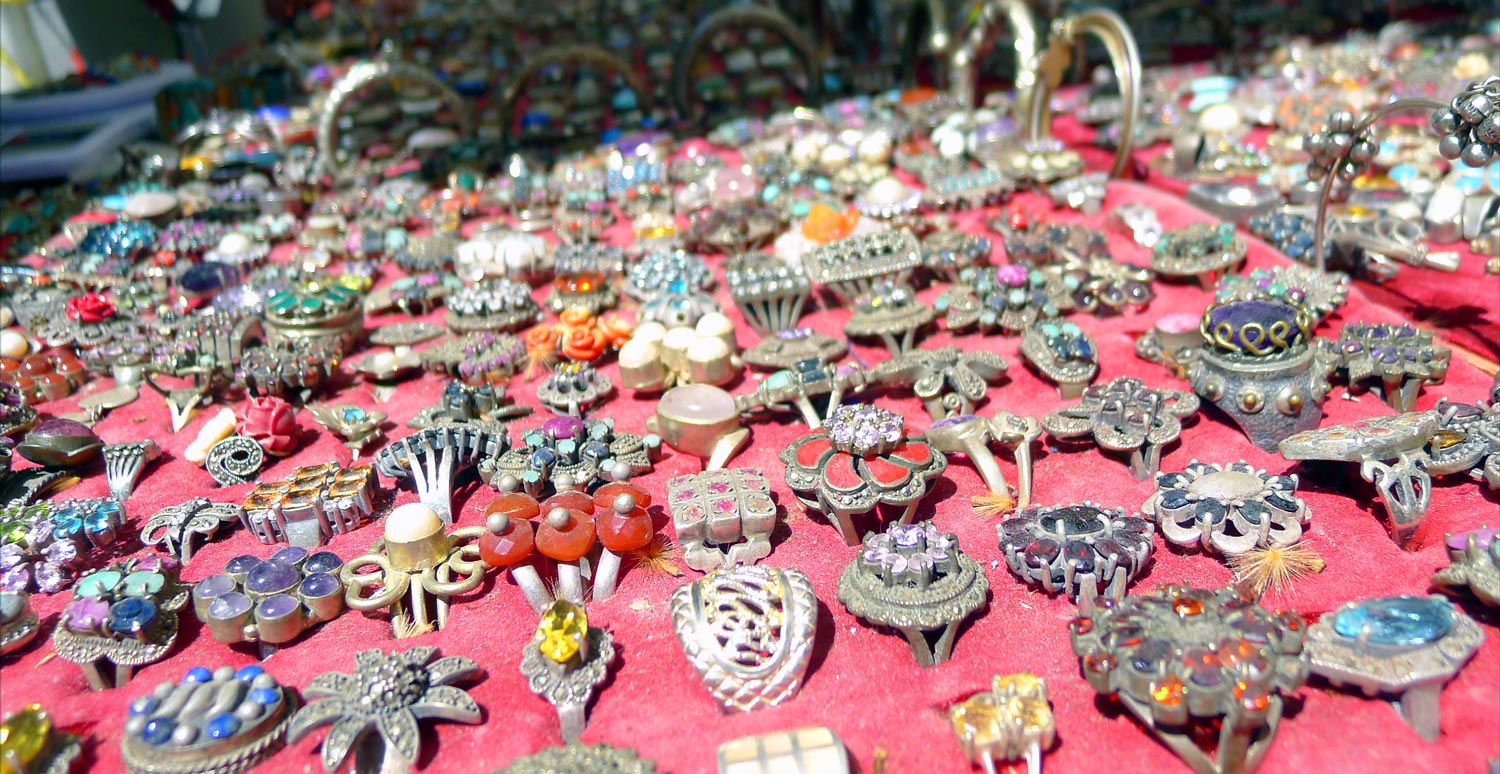
The Flea Market of Rome: Porta Portese
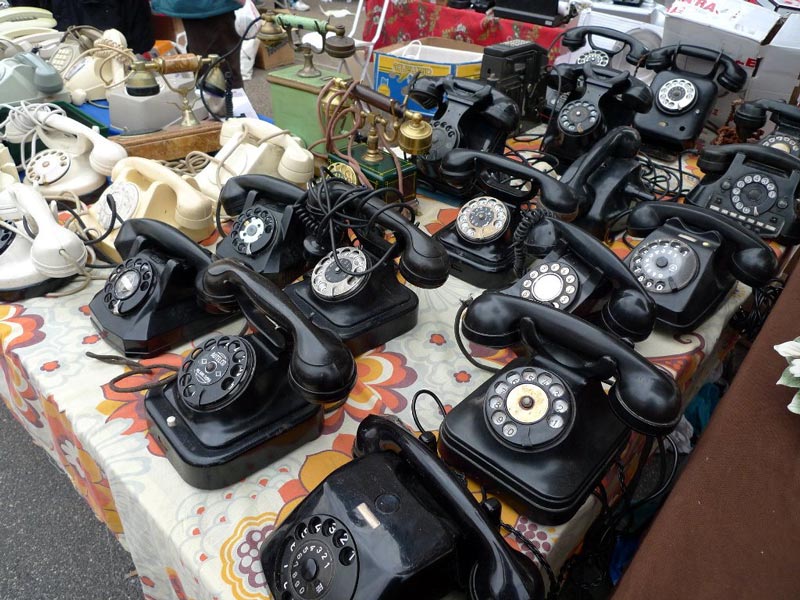
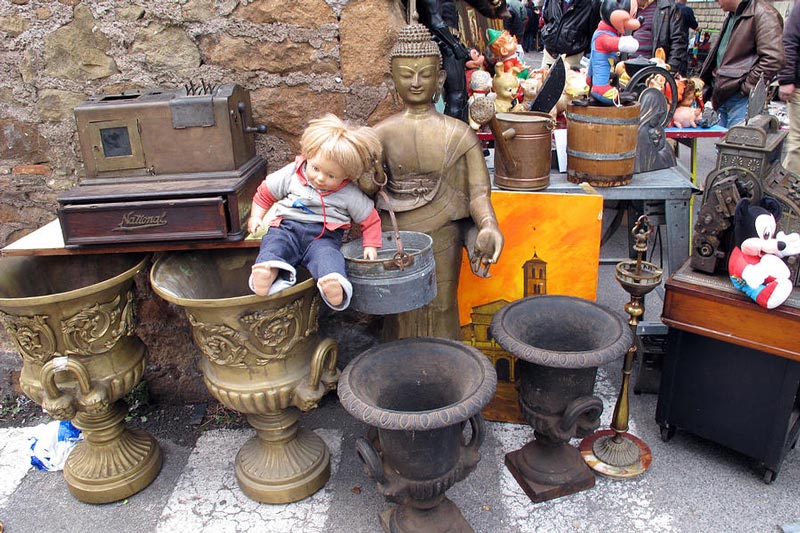
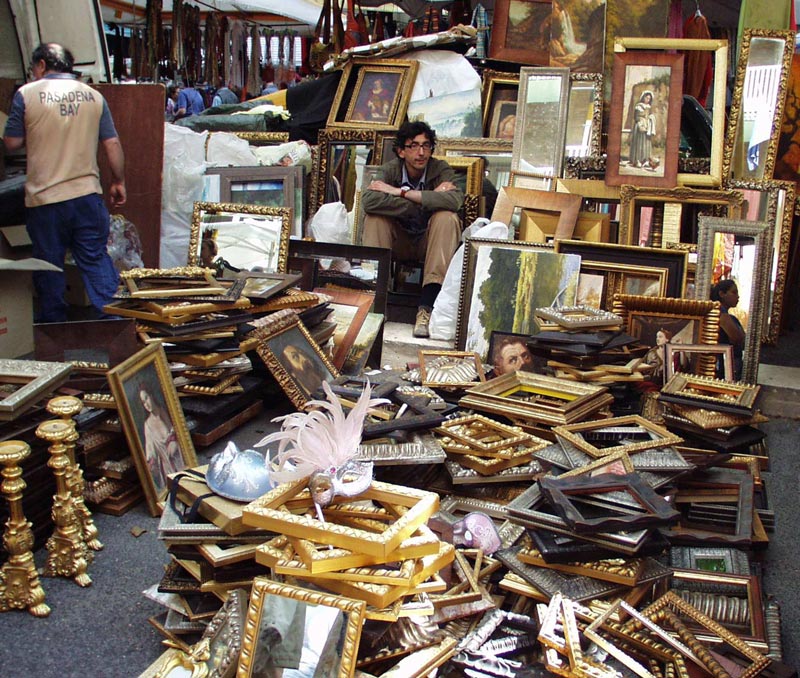
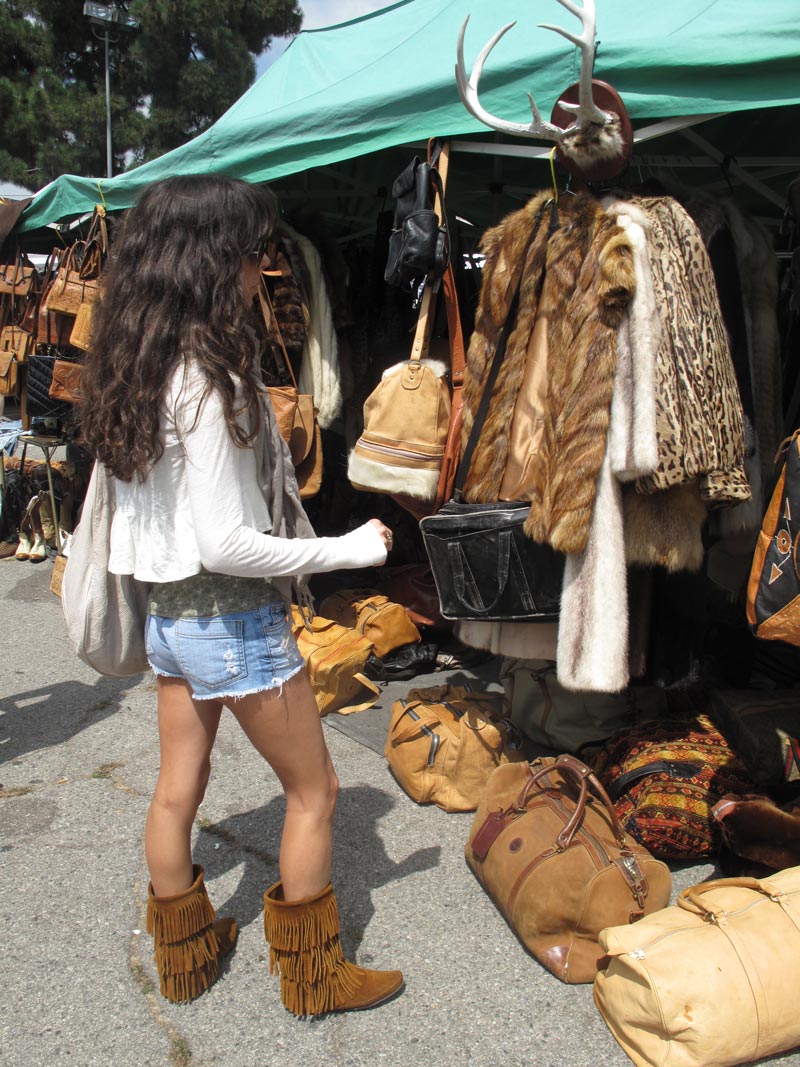
Because of its multi ethnicity and the possibility to find unthinkable objects, there is a quote that says that at Porta Portese “you can find anything, from a pill to a Jumbo Jet’!
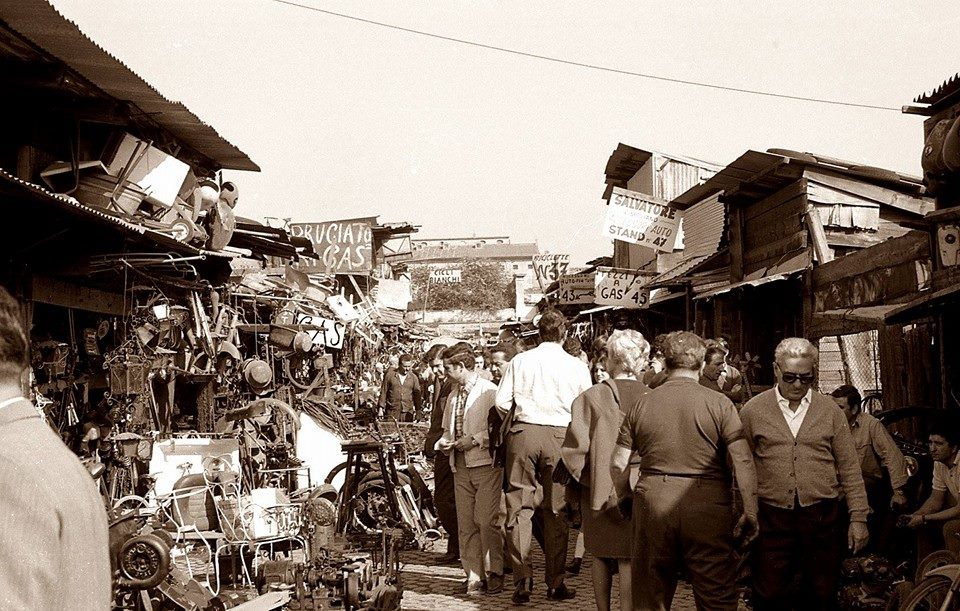
Porta Portese is the flea market of Rome for excellence.
Porta Portese Flea Market
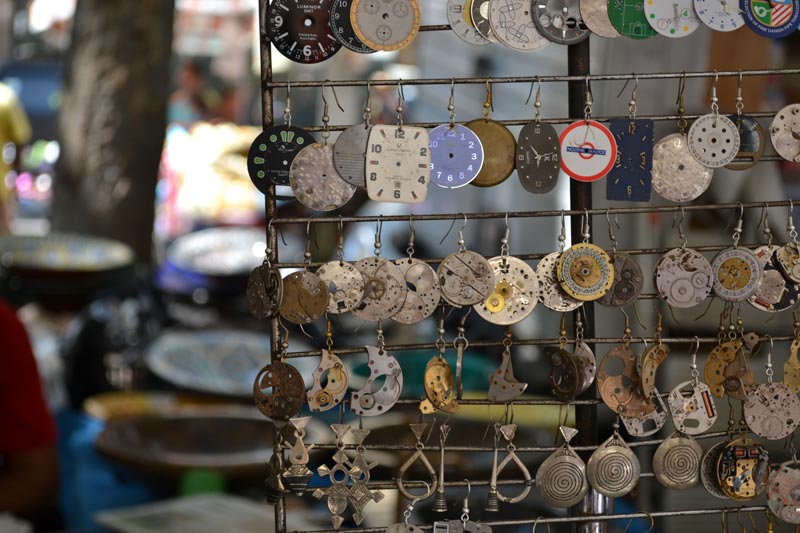
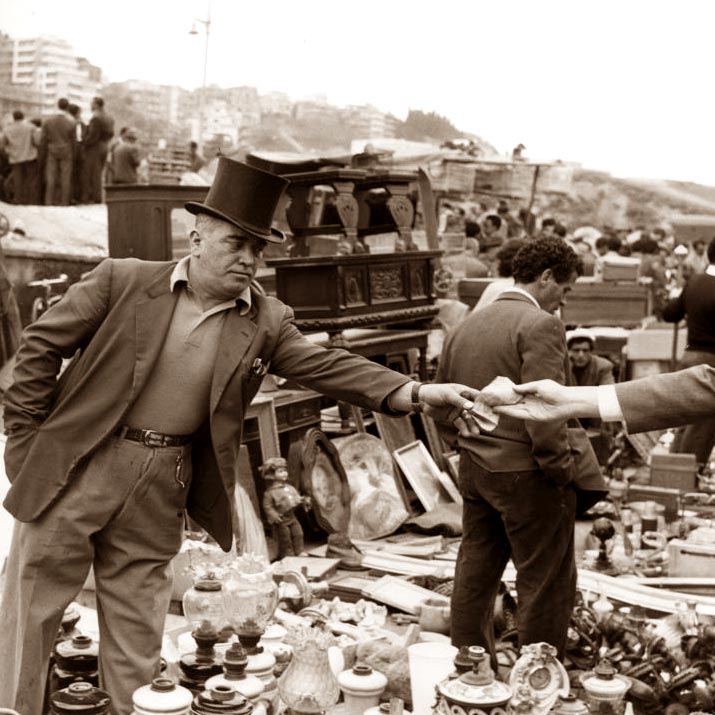
Here you can find a bit of everything: furniture, clothes, CDs, books, prints, historical newspaper … and the list can be endless.
Because of its multi ethnicity and the possibility to find unthinkable objects, there is a quote that says that at Porta Portese “you can find anything, from a pill to a Jumbo Jet’!
The market open its doors every Sunday, from 6 am until 2 pm, and even if many things changed in the last years, the atmosphere here remains awesome!
From Hotel San Francesco is 2 minutes walking
So what are you waiting for? Come here and call your friends out on how good you are in finding better deals than they find!
Author: our receptionist Alessia
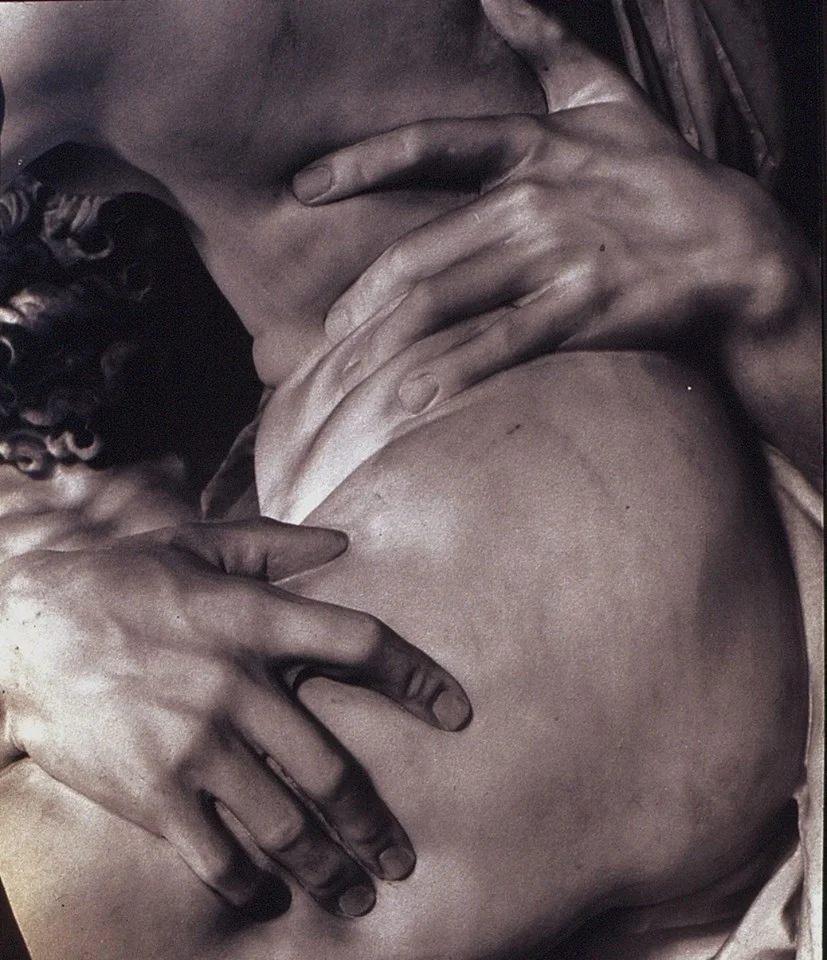
The Rape of Proserpina - G. L. Bernini 1622
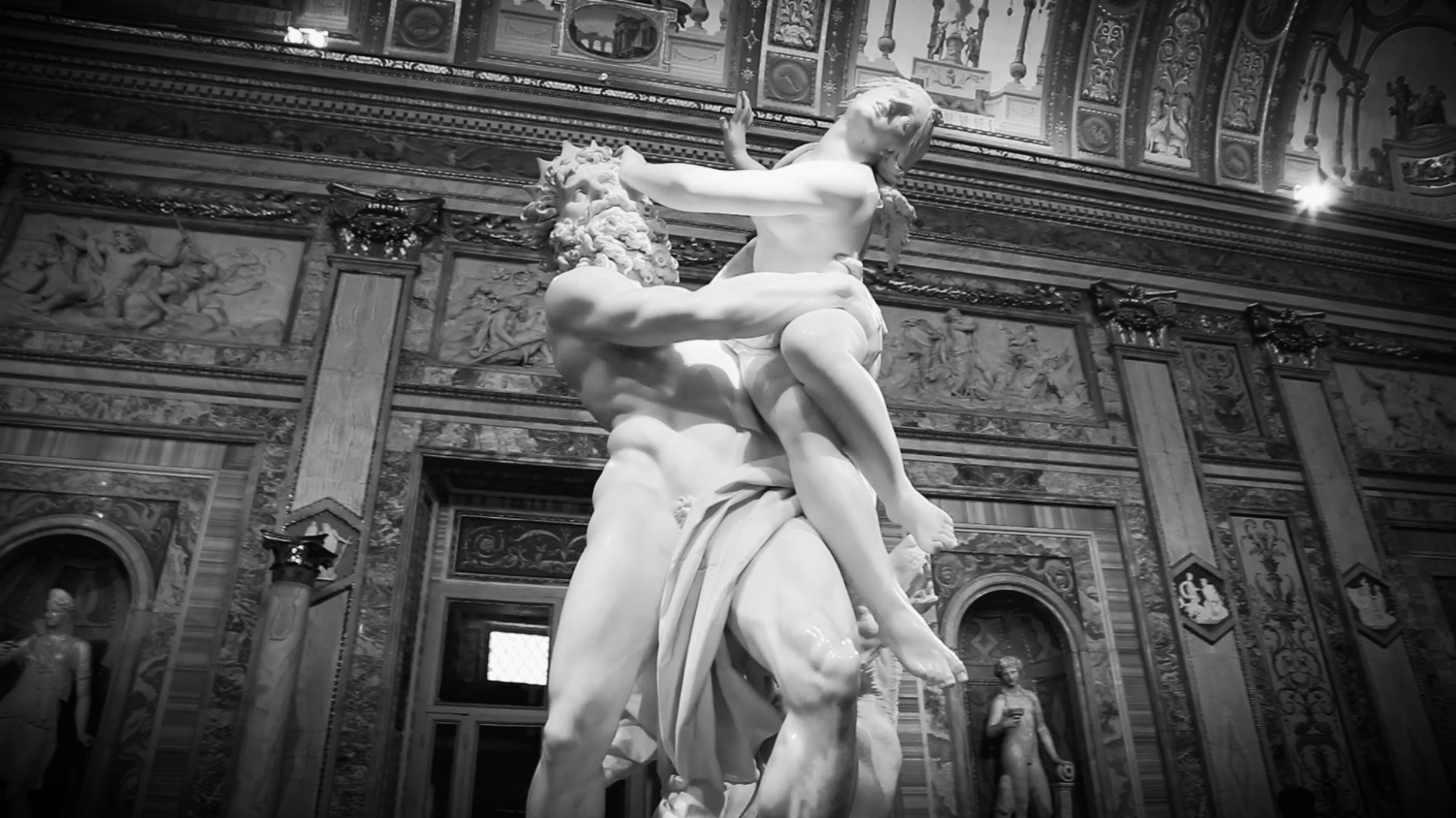
Only the genius of Bernini could make the hard marble look as soft as the human skin.
You will not believe your eyes once in front of this masterpiece...
The Rape of Proserpina is one of the most beautiful sculptures of Gian Lorenzo Bernini.
The work was committed by Cardinal Scipione Borghese and completed in 1622 when Bernini was only 23 years old.
Since 1908, the masterpiece can be admired at the Borghese Gallery of Rome thanks to the Italian State who purchased it and returned to the original place from the Villa of Cardinal Ludovisi.
Only the genius of Bernini could make the hard marble look as soft as the human skin
The Rape of Proserpina - Gian Lorenzo Bernini 1622



Useful information
To book tickets: tel. +39 06 32810
Guided tours booking: fax +39 06 8555952
To visit Galleria Borghese, the ticket reservation is needed
Tickets can be reserved on-line using the site www.tosc.it
Free tickets for Roma Pass holders and the tour guides are only bookable through the Reservation Center (Tel: +39 06 32810 - Mon-Fri 9:00 to 18:00, Sat 9:00 to 13:00, closed Sun and holidays, 24 and 31 December 9:00 am to 13:00 pm)
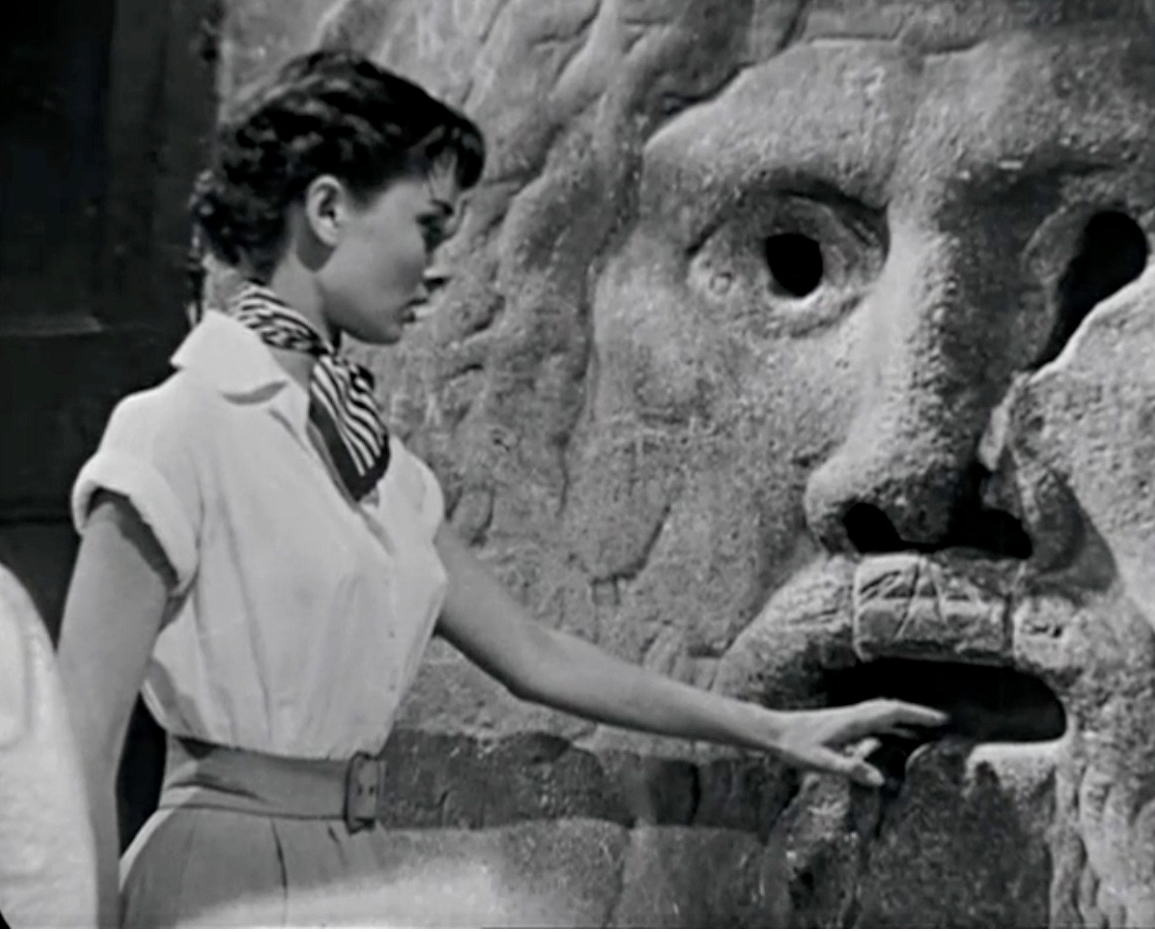
The Mouth of Truth (La Bocca della verità)
Would you test your honesty and put your hand into the mouth of truth?
You definitely can't leave Rome before taking a picture in front of one of the most famous faces in the world...
Would you test your honesty?
Just 10 minutes far from Hotel San Francesco there is one of the most photographed face in the world: La Bocca della Verità

Roman Holiday
La Bocca della Verità (English: the Mouth of Truth) is an image, carved from Pavonazzo marble, of a man-like face, located in the portico of the church of Santa Maria in Cosmedin in Rome, Italy. The sculpture is thought to be part of a first-century ancient Roman fountain, or perhaps a manhole cover, portraying one of several possible pagan gods,[1] probably Oceanus. Most Romans believe that the 'Bocca' represents the ancient god of the river Tiber.

Brigitte Bardot
The most famous characteristic of the Mouth, however, is its role as a lie detector. Starting from the Middle Ages, it was believed that if one told a lie with one's hand in the mouth of the sculpture, it would be bitten off. There was also a medieval legend, wrongly believed to originate with the Roman poet Virgil, of an adulterous empress who managed to deceive her husband in a trial using the Mouth. This is an infrequent subject in medieval and Renaissance art, forming part of the Power of Women literary topos.[2] The piece was placed in the portico of theSanta Maria in Cosmedin in the 17th century. This church is also home to the supposed relics of Saint Valentine.
source: https://en.wikipedia.org/wiki/Bocca_della_Verit%C3%A0
The Legend of Santa Cecilia
The church of Santa Cecilia is located about a 5 minutes walk from Hotel San Francesco and it definitely worths a visit
As per the legend, the house is built on Cecil’s family house “a distinguished virgin, born from a noble roman lineage”, suffering her torment around 22 AD ...
The church of Santa Cecilia is located about a 5 minutes walk from Hotel San Francesco and it definitely worths a visit
As per the legend, the house is built on Cecil’s family house “a distinguished virgin, born from a noble roman lineage”, suffering her torment around 22 AD.
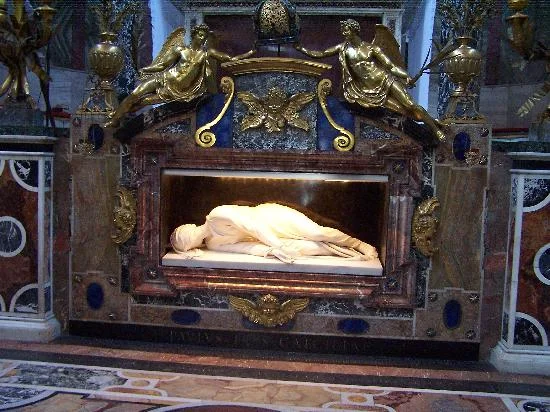
Santa Cecilia - Stefano Maderno
The Golden Legend claims Pope Urbanus I, having converted her husband, Valeriano, witness of her martyrdom, “undertook Cecilia’s body admist bishops’ and hallowed her house turning it to a church, as by her request”
The Titulus Caeciliae is indeed already witnessed from V century. At the beginning of IX century Pope Pasqualis I, great relics’ recoverer and churches builder (Santa Maria in Domnica, Santa Prassede), had a Vision of Cecilia in dream, revealing her burial, He requested to build the basilica on the previous one and transferred her body.


In 1599 during the renovation works by cardinal Paolo Emilio Sfondrati, the marble tomb was opened and inside of the coffin, they found the body almost intact with white clothes and the signs of the wounds on the neck.
The event was considered so miraculous that the pope went to note it personally.
He commissioned the sculptor Stefano Maderno playback of the figure as it had been found. The exceptional work in marble which bears witness to the event is currently on display under the main altar
Il Fontanone: a very special fountain along Janiculum walk
Also known as “Fontanone” among Roman citizens, the Acqua Paola Fountain is one of the biggest fountains of Rome.
Built between 1610 and 1612, this fountain was supposed to be the end of the homonym Acqua Paola Aqueduct ...
Also known as “Fontanone” among Roman citizens, the Acqua Paola Fountain is one of the biggest fountains of Rome.
Built between 1610 and 1612, this fountain was supposed to be the end of the homonym Acqua Paola Aqueduct (formerly known as Trajan’s Aqueduct) and has been expanded and restored as requested by Pope Alessandro VIII in 1690.

Fontana dell'Acqua Paola
Enjoy the Janiculum walk, a path which goes up and down in the Janiculum park through the marmor busts of the most important fighters and heroes of the Italian Risorgimento.
In the big square where the fountain is located, try to close your eyes, then open them again and you’ll see one of the most breathtaking panoramas of Rome: in the background, twelve hills.
The best moment to visit “il Fontanone” is the sunset-time.
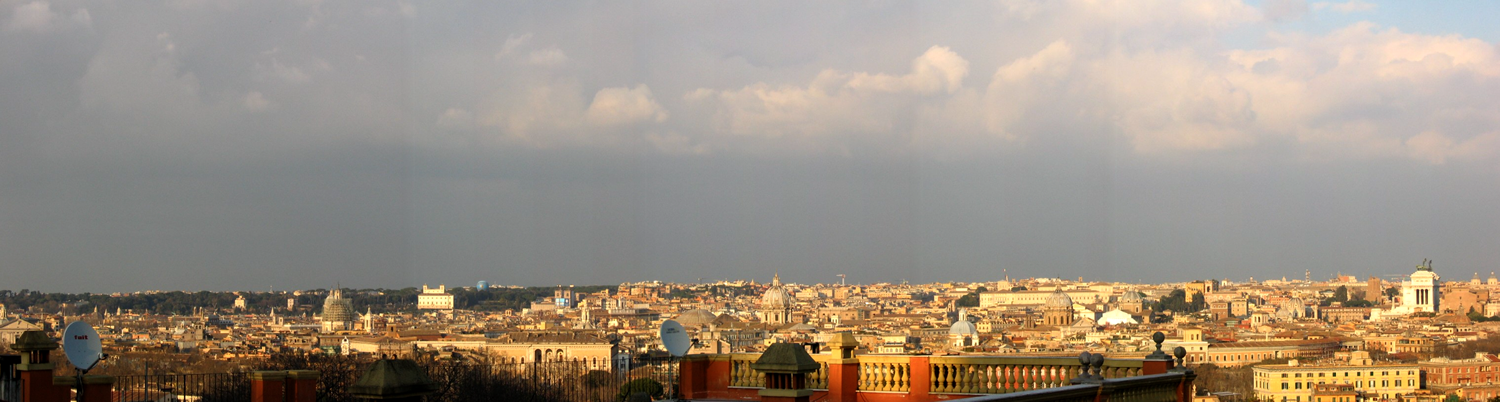
The view from Il Fontanone
From Hotel San Francesco you can easily reach the Acqua Paola Fountain by taking the bus 115 - direction “L.go Fiorentini” at the stop “Trastevere/Min. Pubblica Istruzione”, very closed to the hotel. Get off at the 4th stop named “Garibaldi/Iacobucci” and you’ll find the fountain nearby.
Author: our receptionist Giuseppe
Appian Way: A timeless walk, far from the crowded centre.
Appian Way is an ancient route and the most important built by Romans. That’s why it has been named “ Regina Viarum” (Queen of Roads). It was considered Rome’s gateway to the East and it connected Roma with Capua (near Naples)...
It’s one of my favorite places since I moved to Rome, ten years ago.
Sometimes, when I need a break from the chaotic life of the city, I go there.
Appian Way is an ancient route and the most important built by Romans. That’s why it has been named “ Regina Viarum” (Queen of Roads). It was considered Rome’s gateway to the East and it connected Roma with Capua (near Naples).


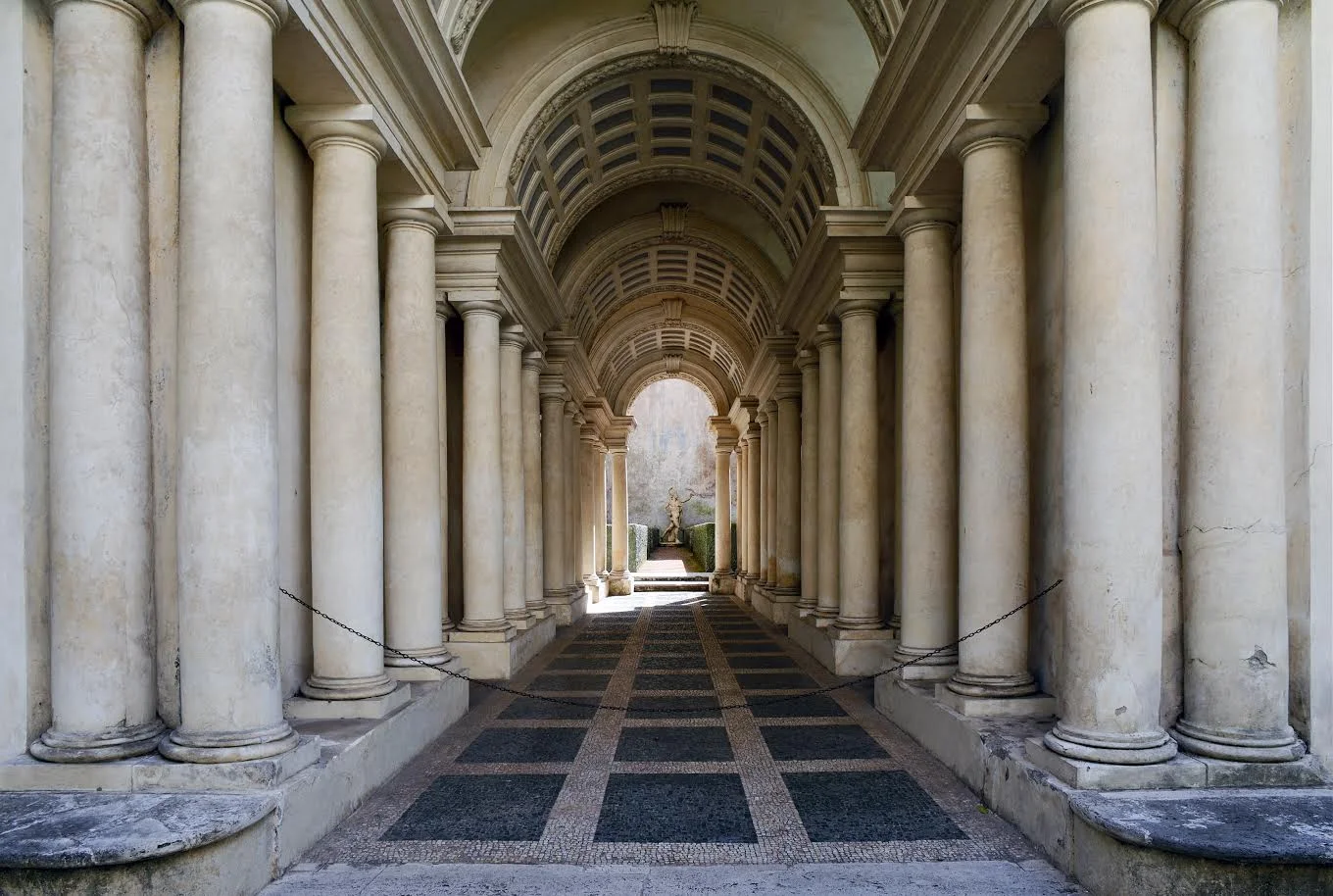
The Appian Way is so rich of history. As you stroll or bike along the road, you'll see tombs of ancient families. One of the best preserved is the Tomb of Cecilia Metella, built for the daughter-in-law of a rich man.
Is also possible to go on an underground tour into the two major Christian catacombs, to see the niches where early Christians were buried. The Catacombs of San Sebastiano also has a historic fourth-century basilica with holy relics, while the larger Catacombs of San Callisto was the burial site for several early popes.
Ready for a travel that will take you back in time 2,000 years?
Useful information
Getting here from the center of Rome is easy; you can catch the bus 118 from Piazza Venezia. The best would be to come on a Sunday or holiday, when the whole park is closed to car traffic, and it becomes an endless pedestrian road.
A good starting point could be the info point in via Appia Antica 58/60,opened every day, where is possible to rent bikes. You can also enjoy a meal at the nearby cafè.
In addiction to the entry ticket, every sunday morning, Coopculture makes available to visitors a free guided tour to Villa dei Quintili and Cecilia Metella tomb.
To get info, visit www.viaappiaantica.com or buy tickets on www.coopculture.it .
Author: our receptionist Cecilia
One of the best gelato in Trastevere? Fata Morgana!!
Forget about traditional flavors as “Stracciatella”or “Pistacchio”.
In her ice cream lab, Maria Agnese Spagnuolo, well known as “Fata Morgana”, combines only the best ingredients. The end result is a perfect and unusual mix of flavors as “Basilico + Noci + Miele” (basil, nuts and honey) or “Crema di mais + Pop Corn...

Fata Morgana
Organic, home made ice cream in Trastevere
Forget about traditional flavors as “Stracciatella”or “Pistacchio”.
In her ice cream lab, Maria Agnese Spagnuolo, well known as “Fata Morgana”, combines only the best ingredients. The end result is a perfect and unusual mix of flavors as “Basilico + Noci + Miele” (basil, nuts and honey) or “Crema di mais + Pop Corn caramellato” (mais cream and candied Pop Corn). Last but not least, all flavors are made with fresh fruit, flowers and spices, which means 100% organic.
So, if you need a refreshing break around Trastevere, definitely go there.

Despite the small size of the shop you will have the possibility to join your ice cream, sitting in Piazza San Cosimato, experiencing the essence of Trastevere.
Personally, I recommend you “Green tea Matcha”, against muggy and “Pollicina”, made with violet liquor,rosebud, nuts and fresh milk. It tells about the story of Pollicina, a girl tall like an inch, sleeping in a nutshell, having flowers of violets as mattress and rose petals as blanket.
Fata Morgana
Via Roma Libera, 11 00153 Roma
Every day 09:00 AM – 00:00
This post has been edited by our receptionist Cecilia
A Bernini's masterpiece just around the corner
The Church of San Francesco a Ripa, just beside the Hotel San Francesco, contains one of the most beautiful sculpture of Gian Lorenzo Bernini: The Ecstasy of Blessed Ludovica Albertoni - 1674...

Ecstasy of Blessed Ludovica Albertoni - Gian Lorenzo Bernini 1674
The Ecstacy of Beata Ludovica Albertoni
The Church of San Francesco a Ripa, just beside the Hotel San Francesco, contains one of the most beautiful sculpture of Gian Lorenzo Bernini: The Ecstasy of Blessed Ludovica Albertoni - 1674
The entrance is free, as for all churches of Rome, and the statue is located in the last chapel of the left side, The Altieri Chapel.
Blessed Ludovica Albertoni was a noblewoman who dedicated her life assisting poor of Trastevere after the died of her husband.
How to reach it from the hotel
Once out of the hotel walk right until the square and you will find the church on the right side